







Summary
Reviews and
Articles
FAQ
Excerpt
The House of Rajani was published in February 2008 by Yedioth Sfarim (editor: Rana Verbin), has become shortly after its publication a best-seller and was acclaimed by Haaretz newspaper as "fascinating, wise, enjoyable and important book". The book was translated from the Hebrew into five languages: English (by Evan Fallenberg), French ("La maison Rajani" – by Jean-Luc Allouche), Dutch ("Huize Rajani" by Shulamit Bamberger), Italian ("La Tenuta Rajani" by Alessandra Shomroni) and Portuguese (“Casa Dajani” by Lúcia Mucznik).
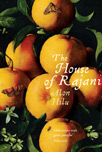 The
year is 1895, Jaffa. Salah Rajani, a
troubled Muslim boy living in a
dilapidated mansion surrounded by
orange groves, suffers from peculiar
visions about a disaster which is
set to befall his people. His life
is changed by the arrival of a
handsome young man, a dynamic Jewish
settler, new to the city. The Jewish
man covets both the fertile lands of
the Rajani estate and Salah's
beautiful mother Afifa, and his
friendship with the boy is destined
to lead to violence and tragedy.
This rich and colourful novel is
made up of the two opposing journals
of Hilu's intriguing and
extraordinary protagonists as they
negotiate love, honour and betrayal
in the changing world of
nineteenth-century Palestine.
The
year is 1895, Jaffa. Salah Rajani, a
troubled Muslim boy living in a
dilapidated mansion surrounded by
orange groves, suffers from peculiar
visions about a disaster which is
set to befall his people. His life
is changed by the arrival of a
handsome young man, a dynamic Jewish
settler, new to the city. The Jewish
man covets both the fertile lands of
the Rajani estate and Salah's
beautiful mother Afifa, and his
friendship with the boy is destined
to lead to violence and tragedy.
This rich and colourful novel is
made up of the two opposing journals
of Hilu's intriguing and
extraordinary protagonists as they
negotiate love, honour and betrayal
in the changing world of
nineteenth-century Palestine.
"An outstanding book" - Israeli President Shimon Peres (Channel 2 News, May 28, 2008)
"Bold storytelling" (Times Literary Supplement, February 19, 2010)
“An extraordinary book” (The Guardian)
"A brilliant novel" (Le Monde)
"This is a one of a kind book that presents the encounter of two cultures through individuals. The author takes care in making each character sound different and unique on the page. In the interaction that takes place between the two, where there is no common language, the tragedy of their clash taking place beneath the surface is discernible” (Shimon Peres, Literary Forum at the President’s Residence, June 8, 2009)
"…this book is a masterpiece of a rich and lush linguistic tapestry…The strong effect of (Hilu's) writing does not derive only from his new look at events of the past, but also and mainly from the way in which he compels us to think anew about today's political reality and its bleak future. .. an important, great book, and I assume it will be much discussed in the future" – Haaretz Book Review (front page)
"The most attractive young author around. Everyone complains that young Israeli literature is in trouble. We are the last to argue. However, as with any good generalization, there is an exception. In this case the exception is Alon Hilu. Four years ago, he published his first book, Death of a Monk – a dark historical novel about a blood libel in nineteenth-century Damascus, written in a thick and fiery language as if it were brought from another place. Then it became clear that Hilu was a name to remember. The reviews danced in praise of him; in literary circles Hilu was marked as the next great hope; David Grossman called to offer his compliments. Now, with his new novel, Hilu is again taking the reader to raft in a raging river, faraway from 2008" - Yedioth Ahronot
"A surprising and excellent novel, positioning Alon Hilu in a good stand within the first rank of the important Israeli literature" - Ynet
"The House of Rajani should be read like a funny fairytale with occasional parody, told by an adroit storyteller. The wings of Hilu's imagination are wide and spectacular" - TimeOut Tel Aviv
“They called me a Traitor” - Interview to the Jewish Chronicle on February 25, 2010
Interview with Alon Hilu on Israel and Palestine in Art (Five Books, March 8, 2010)
“The Counter-narrator” – Interview with the Jerusalem Post on April 23 2010
The House of Rajani –
Frequently Asked Questions
What is true and what is fictional in The House of Rajani?
It is important to note that The House of Rajani is first and foremost a work of fiction. Contrary to my claim in A Word from the Author to His Readers, the book is in no way based on diaries written by Isaac Luminsky or Salah Rajani.
Why did you decide to change the names of the protagonists?
The original book in Hebrew uses names of real-life people, such as Haim Margaliot Kalvarisky and the Dajani family. Since the descendants of real-life Kalvarisky were highly offended by the fictional story of the book, I asked the translators to change the names.
What sort of language did you use in writing the book?
The House of Rajani is written in two voices recorded in parallel diaries, one belonging to Salah Rajani and the other belonging to Isaac Luminsky. Salah's diary is written as if translated from the Arabic in a style similar to that which I employed in my previous novel, Death of a Monk, though in The House of Rajani the language is more polished and sounds more fluid to the modern reader. The second diary emulates the style of Hebrew written at the end of the nineteenth century, which, as can be seen in newspapers from the period, combines ornate Biblical Hebrew with the frequent use of words taken from foreign languages in a manner that is comic to the modern ear. The Hebrew version of The House of Rajani includes a glossary of words and abbreviations used in the text that are no longer familiar to the contemporary reader.
Is The House of Rajani a political novel?
The House of Rajani is a political novel insofar as it touches upon the burning political issues of our day, like the Jewish-Palestinian conflict, the Palestinians' right of return and the Muslim past of Tel Aviv. The book also deals with the denial and suppression of Palestinian estates and villages that sat in the heart of the secular Jewish Zionist entity that straddled a small area of land contained between the Ayalon River (known as Wadi Musrara to the Palestinians) to the east and the Mediterranean sea to the west, between Jaffa to the south and the Yarkon River (El-Aouja) to the north.
The book, however, is not political in that it does not take a stand; instead, it presents in parallel two stories – one Arab, one Jewish – without determining which one is 'true.'
Is The House of Rajani an anti-Zionist novel?
The House of Rajani was condemned by Israeli critics as being an anti-Zionist novel, but I never thought it was anti-Zionist. On the contrary, I believe that changing the perception of the perpetual victimhood under Jewish-Israeli narrative, and learning to de-demonize the Palestinian “other”, may pave the way to true reconciliation between Jews and Arabs in Israel.
Does your new book contain homoerotic content like that of your previous book, Death of a Monk?
No. However, it deals with masculinity and relationships between fathers and sons, and between pseudo-fathers and pseudo-sons. While Luminsky is completely heterosexual, Salah develops deep feelings for him.
Does your background as a Jew of Syrian parentage arise in The House of Rajani as it did in Death of a Monk?
I would say that the matter of my background comes to play from a different angle this time: not from the intention of bringing to the reader's attention the glorified days of Mizrahi Jews but from a critical view of the European Jewish pioneer in Israel that is so entrenched in the Zionist narrative. In other words, Luminsky writes his diary from a certain viewpoint while this Mizrahi writer peers over his shoulder and criticizes his colonialism, his chauvinism, and his complete misreading of what his eyes are witnessing.
To whom did you dedicate this book, and why?
The book is dedicated to Vered Csillag, a classmate of mine from the Hebrew University Secondary School in Jerusalem who was a close friend and who loved my writing. Vered was herself a talented artist and creative person who studied graphic design at the prestigious Bezalel Academy of Arts and Design in Jerusalem. She died in 1996 at the age of 25 before marrying or having children. Although we were not in touch during the last years of her life, I found myself thinking about her quite often and feeling the pain her parents must be enduring as she slips from memory. I hoped that dedicating the book to her might bring her back, in some small way, to her those who loved her.
Are the rumors true about your having consulted a fortuneteller in the writing of The House of Rajani?
Absolutely. At a certain stage of the writing I found myself blocked, and a very talented fortuneteller – Gal Rubin (www.galrubin.co.il) – was able to invoke a spirit who advised me how to solve the problem.
What have been the reactions to the book in Israel?
The House of Rajani was featured on the front page of the Haaretz literary supplement, which called the novel "important and destined for greatness." Critics in Israel were generally unanimous in their praise of the book's literary value, but some of them described the book as an act of moral falsification of the Zionist narrative.
With regard to Israeli politicians and journalists, the book has been very well received. President Shimon Peres recommended the book on Channel Two News at the opening of National Book Week, calling it "exceptional." Screenwriter Gal Ochovsky (Walk on Water, The Bubble) and columnist Neri Livneh praised the book highly in the Israeli media.
Arab Israelis – among them Radio Cairo correspondent Khamis Abulafia and politician Ahmed Tibi – have called the book "riveting" and claim to find an echo of the Palestinian narrative embedded within. On the other side of the political spectrum, rightists and settlers have stated that the book is an undermining of the Palestinian narrative, since some of the Arab characters are weak or addled and since the lands of the Rajani estate are not properly cultivated by its Arab owners. As such, the book was praised by rightist media outlets like Radio Kol Chai and the Makor Rishon newspaper.
The most vociferous criticism of the book has come from the representatives and descendants of the first waves of Jewish immigration, including the author Aharon Megged, who has protested the negative and fictional characteristics attributed to real-life characters like Kalvarisky, which he claims is "contrary to literary ethics." In correspondence between Aharon Megged and me that has been printed in the Israeli press, Megged has expressed anger at what he calls the "anti-Zionist" contents of the novel.
What was the Sapir scandal all about?
The House of Rajani was awarded the Sapir prize in 2009, but two weeks after the public announcement on Television, the award was withdrawn due to allegations of a conflict of interest of the chairman of the committee, Mr. Yossi Sarid. The sponsors of the Sapir prize (National Lottery – Mifal Hapais) planned to start the process from the beginning, but eventually they did not select any other book and paid me NIS 70,000 as compensation.
What is the underlying message of the book?
The book was not written for the purpose of passing along any kind of message. The initial catalyst for writing it came from a scene I envisioned one day as I sat in a Tel Aviv café: all at once I stripped the present reality of its clothes – the Bauhaus buildings, the uniquely Israeli window blinds, the ugly air-conditioning units, the ficus trees, the asphalt sidewalks, the low stone walls – and I could picture the orchards and groves and prickly pear cactuses of the Palestinians who had lived there in the past. I shuddered, and at that moment I decided to try to pass that feeling along to my readers in a historical novel about Tel Aviv's Palestinian past and about the first wave of Jewish immigration.
